

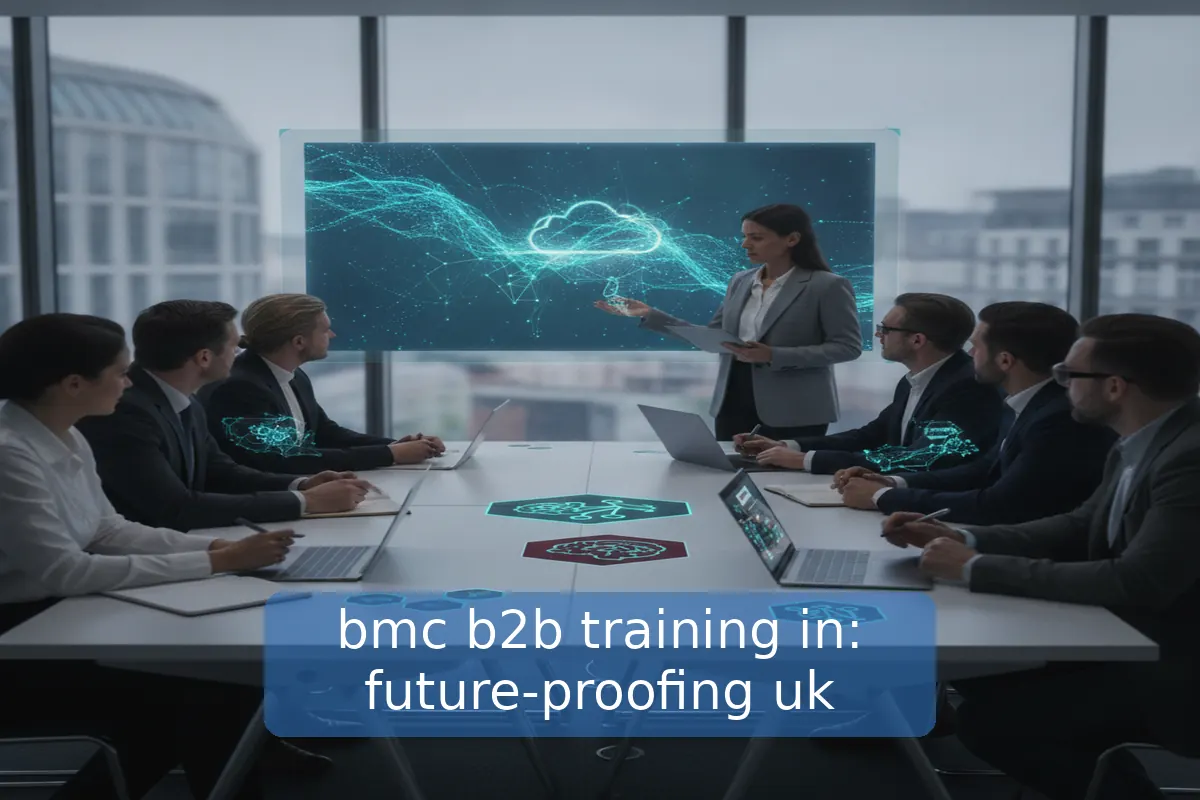
In 2026, BMC B2B Training is fundamentally transforming how UK businesses prepare their workforce for an evolving landscape. Moving beyond traditional methods, BMC champions agile, technology-driven, and deeply personalised learning experiences that are crucial for maintaining a competitive edge, fostering innovation, and ensuring robust team resilience. This guide, drawing on BMC Training‘s extensive field expertise, outlines the pivotal trends shaping B2B learning and offers actionable insights to help organisations like yours effectively upskill and future-proof their teams.
Quick Summary
- BMC B2B Training in 2026 is vital for UK businesses navigating rapid technological shifts
- it focuses on agile, personalised, and technology-driven learning experiences
- key trends include AI-powered adaptive learning, immersive experiences, and a strong emphasis on human-centric skills
- organisations must strategically invest in continuous upskilling and robust ROI measurement
Why is BMC B2B Training More Critical Than Ever for UK Businesses in 2026?
The pace of change in the UK business environment, driven by rapid technological advancements and shifting global dynamics, makes continuous professional development non-negotiable. For UK companies, investing in strategic B2B training – specifically from expert providers like BMC Training – isn’t just a benefit; it’s a strategic imperative for survival and growth. The landscape of 2026 demands a workforce that is not only skilled but also adaptable, resilient, and continuously learning.
Key factors amplifying the urgency of B2B training in 2026 include:
-
Accelerated Digital Transformation: The pervasive integration of AI, machine learning, and cloud technologies across all sectors means employees need new digital literacy and specialised skills to leverage these tools effectively. Courses like “Data Management, Manipulation and Analysis using Excel” or “Artificial Intelligence Strategy for Business Professionals” are no longer niche but foundational.
-
Evolving Job Roles: Many traditional roles are being redefined, while entirely new ones emerge. Companies must proactively upskill their existing workforce to fill these gaps, rather than relying solely on external recruitment, which can be costly and time-consuming. This directly addresses the need to upskill company teams comprehensively.
-
Global Competitiveness: UK businesses operate in a highly competitive global market. A well-trained, highly skilled workforce is a significant differentiator, enabling faster innovation, better customer service, and more efficient operations.
-
Employee Retention & Engagement: Offering high-quality training and clear career development paths is a powerful tool for attracting and retaining top talent. Employees are more likely to stay with organisations that invest in their professional growth.
-
Regulatory and Compliance Demands: Industries face increasingly complex regulatory landscapes. Training ensures teams are up-to-date with compliance requirements, mitigating risks and ensuring ethical operations. For example, “Governance, Risk, and Compliance (GRC)” or “Effective Business Risk Management Strategies using ISO 31000 Framework.”
Without strategic B2B training, UK companies risk falling behind competitors, experiencing skill shortages, reduced productivity, and ultimately, a decline in market position. BMC Training, as a leading corporate training center, understands these challenges and offers tailored solutions.
What Key Skills Will Future-Proof UK Teams in 2026?
In 2026, the most valuable skills blend advanced technical proficiency with highly developed human capabilities. For any upskill company initiative, focusing on these areas will yield the greatest return. BMC Training’s extensive portfolio directly addresses these critical needs, ensuring UK teams acquire the best skills to learn in 2026.
1. Digital & Technical Fluency:
The bedrock of modern business, these skills enable teams to leverage technology effectively.
-
AI & Machine Learning Literacy: Understanding AI’s capabilities, ethical implications, and practical application in business. Courses like “Artificial Intelligence Strategy for Business Professionals” or “Governance of Artificial Intelligence – AI.”
-
Cloud Computing Proficiency: Navigating cloud environments, managing data, and utilising cloud-based tools for collaboration and infrastructure.
-
Data Analytics & Interpretation: The ability to collect, analyse, and derive actionable insights from data. Examples include “Data Science for Business Decision Making” and “Data Management, Manipulation and Analysis using Excel.”
-
Cybersecurity Awareness: Protecting sensitive information and understanding digital threats in an increasingly interconnected world. Relevant courses include “Enterprise Data Security and Risk Management.”
2. Human-Centric Skills (Soft Skills 2.0):
These are indispensable, becoming even more critical as AI handles routine tasks.
-
Advanced Communication & Collaboration: Effective verbal, written, and cross-cultural communication, alongside seamless teamwork. BMC offers “High Impact Business Communication,” “Advanced Communication and Interpersonal Skills,” and “Managing and Leading in a Multi-Cultural Workplace.”
-
Critical Thinking & Problem Solving: Analysing complex situations, identifying root causes, and developing innovative solutions. Courses like “Creativity, Critical Thinking and Problem Solving” are essential.
-
Emotional Intelligence & Leadership: Understanding and managing emotions, fostering empathy, and inspiring teams. Consider “Emotional Intelligence in Leadership Pinnacle” or “Leadership and Strategic Impact.”
-
Adaptability & Resilience: The capacity to thrive amidst change, ambiguity, and pressure. “Organisational Resilience” and “Leadership Excellence in Handling Pressure and Stress” are highly relevant.
-
Creativity & Innovation: Generating new ideas and approaches to challenges, fostering a culture of continuous improvement. Explore “Continuous Innovation and Process Improvement” and “Leadership, Creativity and Peak Performance.”
3. Strategic & Managerial Acumen:
For leaders and managers to guide their teams through complex environments.
-
Strategic Planning & Execution: Developing and implementing long-term organisational goals. “Strategy Design Bootcamp,” “Strategic Planning Professional,” and “Strategic Planning, Development and Implementation” are core offerings.
-
Project & Change Management: Leading initiatives efficiently from conception to completion, and managing organisational transitions smoothly. “Project Management Essentials” and “Advanced Conflict Resolution and Change Management Strategies.”
-
Effective Decision Making: Using data and critical judgment to make timely and impactful choices. “Effective Business Decisions Using Data Analysis” and “Mastering Strategic Decision Making.”
By combining these diverse skill sets, UK businesses can create a robust, agile, and truly future-proof workforce.
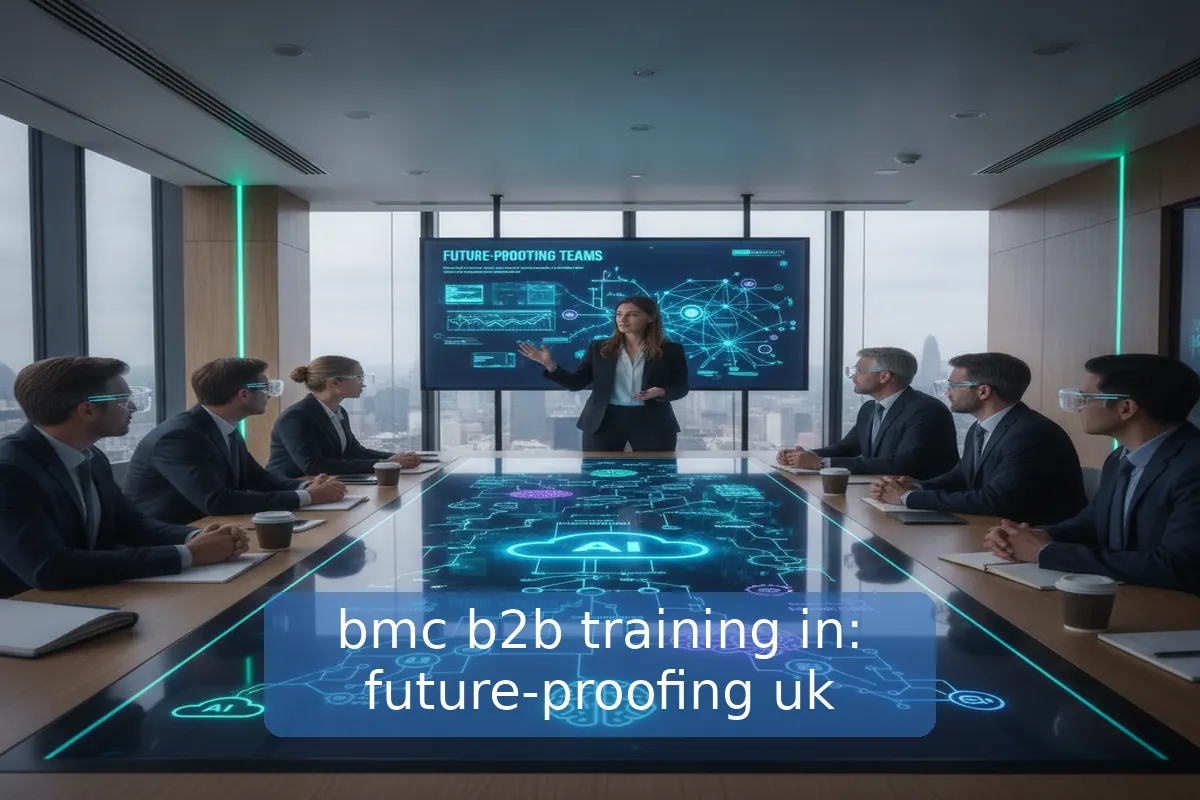
How Are Leading Corporate Training Centers Delivering Impactful B2B Learning in 2026?
As a premier corporate training center, BMC Training leverages cutting-edge methodologies and technologies to ensure learning is engaging, effective, and directly applicable. The days of one-size-fits-all, lecture-heavy training are over. In 2026, the focus is on dynamic, personalised, and measurable experiences.
Leading approaches include:
-
AI-Powered Personalisation & Adaptive Learning: AI algorithms analyse learner progress, preferences, and performance data to tailor content, pace, and delivery methods. This ensures each participant receives the most relevant and challenging material, optimising learning outcomes and efficiency.
- Example: If a learner struggles with a specific data analysis concept, the AI system might offer additional resources, practice exercises, or even recommend a specific microlearning module before moving on.
-
Immersive Learning Experiences (VR/AR): Virtual and Augmented Reality are moving beyond novelty to provide highly realistic and safe environments for skill practice. This is particularly effective for complex technical skills, crisis management simulations (“Leadership and Decision – Making in Crisis and Emergency Situations“), or intricate operational procedures.
- Benefit: Reduces risk, increases engagement, and provides hands-on experience without real-world consequences.
-
Microlearning & Continuous Skill Refresh: Breaking down complex topics into short, digestible modules (5-15 minutes) makes learning accessible, fits into busy schedules, and allows for frequent skill reinforcement. This supports a culture of continuous learning rather than one-off training events.
- Application: Ideal for updating knowledge on rapidly changing compliance rules or new software features.
-
Hybrid & Blended Learning Models: Combining the best of in-person, virtual live, and self-paced online learning. This offers flexibility, caters to diverse learning styles, and ensures global accessibility for dispersed teams.
- Flexibility: A team might complete foundational knowledge online, then participate in a virtual live workshop for interactive problem-solving, followed by a practical in-person session for hands-on application.
-
Data-Driven ROI Measurement: Modern training providers go beyond completion rates. They utilise analytics to track skill acquisition, behavioural changes, and direct business impact (e.g., improved productivity, reduced errors, increased sales). This allows companies to clearly see the return on their BMC B2B training investment.
What Strategies Can UK Companies Use to Effectively Upskill Their Workforce?
To truly upskill company teams and maximise the impact of BMC B2B Training, a strategic, structured approach is essential. It’s not just about enrolling in courses; it’s about integrating learning into the organisational fabric.
Here’s a practical framework for UK companies:
-
Conduct a Comprehensive Skills Gap Analysis:
- Identify Current Capabilities: What skills do your teams currently possess?
- Define Future Needs: What skills will be required in 1, 3, and 5 years to meet strategic objectives? Consider emerging technologies, market shifts, and new business models.
- Pinpoint Gaps: The difference between current and future capabilities dictates your training priorities. BMC Training can assist with this assessment, leveraging its deep industry knowledge.
-
Align Training with Business Strategy:
- Ensure every training initiative directly supports a specific business goal, whether it’s increasing innovation, improving customer satisfaction, or boosting operational efficiency.
- Example: If a company’s strategy is to become a data-driven organisation, training in “Effective Business Decisions Using Data Analysis” becomes a strategic imperative.
-
Design Tailored Learning Pathways:
- Move beyond generic courses. Work with providers like BMC Training to customise content and delivery to your specific industry, company culture, and employee roles.
- Create clear learning pathways for different departments or career levels, incorporating a mix of technical, human-centric, and strategic skills.
- Consider: “The Leadership Development Programme” for aspiring managers, or “IT Service Management” for tech teams.
-
Foster a Culture of Continuous Learning:
- Encourage employees to view learning as an ongoing process, not a one-time event.
- Provide access to microlearning resources, internal knowledge-sharing platforms, and mentorship programmes.
- Recognise and reward learning achievements to reinforce positive behaviours.
-
Measure and Optimise ROI:
- Establish clear KPIs before training begins (e.g., reduction in error rates, improvement in project delivery times, employee satisfaction scores).
- Utilise post-training assessments, feedback loops, and performance data to evaluate effectiveness.
- Be prepared to iterate and adjust your training strategy based on measurable outcomes. BMC Training emphasises data-driven results for its clients.
By following these steps, UK companies can transform their BMC B2B training initiatives from isolated events into powerful drivers of organisational success.
Choosing the Right B2B Training Partner: What to Look For in 2026?
Selecting the ideal corporate training center for your organisation’s needs is crucial. A strong partner like BMC Training doesn’t just deliver courses; they become an extension of your talent development strategy. When evaluating potential providers for your upskill company initiatives, consider these key criteria:
-
Proven Expertise and Experience:
- Does the provider have a long track record of success in your industry or with similar challenges?
- Do their instructors possess real-world experience and deep subject matter knowledge? BMC Training’s specialists are field experts with practical, hands-on experience.
- Check for: Case studies, client testimonials, and instructor bios demonstrating practical application.
-
Customisation and Flexibility:
- Can they tailor content to your specific organisational context, industry regulations, and unique challenges?
- Do they offer various delivery models (in-person, virtual, blended) to suit your team’s needs and geographic distribution?
- Avoid: Providers offering only off-the-shelf, generic programmes that don’t address your specific skill gaps.
-
Comprehensive Curriculum & Depth:
- Does their course catalogue cover the breadth of skills your teams need, from technical and digital to human-centric and strategic?
- Are their programmes structured for different levels, from foundational to advanced? BMC’s extensive list of courses, from “Essentials of Leadership” to “Advanced Strategic Management,” demonstrates this depth.
-
Focus on Measurable Outcomes and ROI:
- Do they help you define success metrics before training begins?
- Do they provide tools and methodologies for tracking skill acquisition and business impact after training?
- Look for: Providers who partner with you to demonstrate tangible return on investment, not just attendance.
-
Technology Integration:
- Are they leveraging modern learning technologies like AI-powered platforms, immersive tools, or robust Learning Management Systems (LMS)?
- Does their technology enhance engagement and retention?
-
UK Market Understanding:
- Do they understand the specific regulatory, cultural, and economic nuances of the UK business landscape?
- Are their programmes designed with the UK workforce in mind? BMC Training is explicitly focused on BMC B2B Training UK.
By rigorously applying these criteria, you can ensure you partner with a corporate training center that will deliver lasting value and effectively future-proof your UK teams.
Avoiding Common Pitfalls in Your B2B Training Investment
Even with the best intentions, companies often make mistakes that dilute the impact of their BMC B2B training investments. Being aware of these common pitfalls can help UK businesses maximise their efforts to upskill company teams.
-
Mistake 1: Training Without Strategic Alignment.
- The Pitfall: Implementing training programmes based on perceived needs or employee requests without linking them to overarching business objectives.
- The Fix: Always start with a skills gap analysis tied directly to your company’s strategic goals for the next 1-3 years. Ask: “How will this training help us achieve X business outcome?”
- BMC Insight: Our “Strategy Design Bootcamp” and “Key Performance Indicators and Optimisation” courses help organisations build this foundational alignment.
-
Mistake 2: One-Off, Event-Based Training.
- The Pitfall: Treating training as a singular event (e.g., a 3-day workshop) without follow-up, reinforcement, or integration into daily work.
- The Fix: Design learning as a continuous journey. Incorporate pre-work, post-training assignments, mentorship, microlearning refreshers, and opportunities for practical application back on the job.
- Example: After “Effective Negotiation,” provide scenarios for practice and peer feedback sessions.
-
Mistake 3: Neglecting Human-Centric Skills.
- The Pitfall: Over-focusing on technical skills while ignoring the critical importance of soft skills (communication, leadership, critical thinking), especially in an AI-driven world.
- The Fix: Balance your curriculum. Recognise that while AI handles data, human skills drive innovation, collaboration, and customer relationships. These are the truly future-proof skills.
- BMC Insight: We offer extensive programmes in “Leadership Excellence,” “Advanced Communication and Interpersonal Skills,” and “Emotional Intelligence in Leadership Pinnacle.”
-
Mistake 4: Insufficient Measurement of ROI.
- The Pitfall: Failing to establish clear metrics and evaluate the actual business impact of training, leading to uncertainty about its value.
- The Fix: Define success metrics (e.g., improved project completion rates, reduced customer complaints, higher employee engagement scores) before the training begins. Collect data and analyse the results to prove ROI.
- BMC Insight: Our approach emphasises data-driven outcomes and can help you track the impact of courses like “Performance Measurements, Continuous Improvement and Benchmarking.”
-
Mistake 5: Lack of Leadership Buy-In and Support.
- The Pitfall: Training initiatives failing to gain traction because leaders don’t visibly support them, participate, or integrate new skills into team expectations.
- The Fix: Secure executive sponsorship. Ensure leaders champion the training, model desired behaviours, and create opportunities for employees to apply new skills.
- BMC Insight: Courses like “Strategic Crisis Management” and “The Complete Course on Leadership” are designed to equip leaders to drive these initiatives effectively.
By proactively addressing these common pitfalls, UK companies can ensure their investment in BMC B2B Training yields significant and sustainable returns.
What’s the Best B2B Language Training Platform for Companies?
While BMC Training excels in providing comprehensive professional development across a wide spectrum of business skills, including enhancing communication capabilities, it’s important to clarify its role regarding specific B2B language training platforms for acquiring new foreign languages.
BMC Training offers highly effective courses focused on professional communication within a business context, such as:
-
Business English Skills: Designed to improve spoken and written English proficiency for professional environments, focusing on clarity, conciseness, and impact in international business.
-
Advanced Communication Skills: Covers negotiation, presentation, interpersonal dynamics, and cross-cultural communication, which are vital for global teams.
-
Mastering Communication, Negotiation and Presentation Skills: A comprehensive programme to empower professionals in all aspects of business interaction.
However, if your company’s primary need is to provide employees with a platform for learning entirely new languages (e.g., Mandarin, Spanish, French) from beginner to advanced levels, akin to a digital language learning school, then a specialised B2B language training platform would be more appropriate. These platforms typically offer:
-
Extensive Language Libraries: Covering numerous languages with structured curricula.
-
AI-Powered Tutoring & Practice: Utilising speech recognition, personalised exercises, and virtual tutors.
-
Certified Instructors: Often providing live 1-on-1 or group coaching sessions for specific language acquisition.
-
Progress Tracking & Reporting: Detailed analytics on learner performance and proficiency levels.
How to Integrate Specialised Language Training with BMC B2B Training:
The best approach for companies often involves a blended strategy:
-
Specialised Platforms for Language Acquisition: Utilise dedicated B2B language training platforms (e.g., Rosetta Stone for Business, Babbel for Business, Preply Business, Busuu for Business) for employees needing to learn a new foreign language from scratch or improve existing proficiency.
-
BMC Training for Business Communication & Soft Skills: Once a foundational language proficiency is established, BMC Training can then enhance these skills with courses like “Managing and Leading in a Multi-Cultural Workplace,” “Effective Negotiation,” or “Advanced Communication and Interpersonal Skills,” taught in the business language of choice (typically English), focusing on the application of language in a strategic business context.
This dual approach ensures your teams gain both the linguistic capabilities and the professional communication prowess required to thrive in a globalised 2026 business environment.
Expert Insight
“The future of B2B training isn’t just about delivering content; it’s about engineering a continuous learning ecosystem. Organisations that embed AI-driven personalisation, champion human-centric skills, and rigorously measure the strategic impact of their training initiatives will be the ones that truly future-proof their workforce and sustain competitive advantage in the dynamic UK market of 2026.”
Key Terms
-
B2B Training: Business-to-Business training; professional development programmes provided by one company (like BMC Training) to employees of another company.
-
Upskilling: The process of teaching employees new skills to enable them to do a different or higher-level job within the same company, or to perform their current role more effectively.
-
AI-Powered Personalisation: Using Artificial Intelligence to tailor learning content, pace, and recommendations based on an individual learner’s progress, strengths, and weaknesses.
-
Microlearning: Delivering learning content in short, focused bursts (typically 5-15 minutes) to facilitate easy consumption and retention, often used for continuous skill refresh.
-
Human-Centric Skills (Soft Skills 2.0): Advanced interpersonal, cognitive, and emotional abilities (e.g., critical thinking, emotional intelligence, complex problem-solving, adaptability) that complement technical skills and are increasingly vital in automated environments.
How Can BMC Training Support Your Professional Growth?
As a leading corporate training center committed to BMC B2B Training UK, BMC Training is uniquely positioned to empower your organisation and its employees for the challenges and opportunities of 2026 and beyond. We don’t just offer courses; we provide strategic partnerships tailored to your specific needs.
-
Bespoke Programmes: We design and deliver customised training solutions, integrating your company’s unique context, industry demands, and strategic objectives into every module.
-
Expert-Led Instruction: Our trainers are seasoned industry specialists with real-world experience, ensuring practical, actionable insights that go beyond theoretical knowledge.
-
Comprehensive Skill Development: From “Artificial Intelligence Strategy for Business Professionals” and “Data Science for Business Decision Making” to “Leadership and Strategic Impact” and “Advanced Communication and Interpersonal Skills,” our extensive curriculum covers the full spectrum of critical skills for 2026.
-
Flexible Delivery Models: Whether your teams benefit most from intensive in-person workshops, interactive virtual live sessions, or flexible blended learning approaches, we adapt to your preferred model.
-
Measurable Impact: We partner with you to establish clear KPIs and demonstrate the tangible ROI of your training investment, ensuring your upskill company initiatives drive real business results.
Future-proof your UK teams with BMC Training. Contact us today to discuss how our BMC B2B solutions can transform your workforce and secure your competitive edge.
Frequently Asked Questions
Q: What is B2B training and why is it crucial for businesses in 2026?
Q: How do hybrid learning models enhance B2B professional development?
Q: What are the best training options for tech teams looking to upskill in 2026?
Q: How can my organisation measure the ROI of B2B training?
Q: What role does AI play in personalising B2B learning experiences?
Q: What should you know about bmc b2b login?