

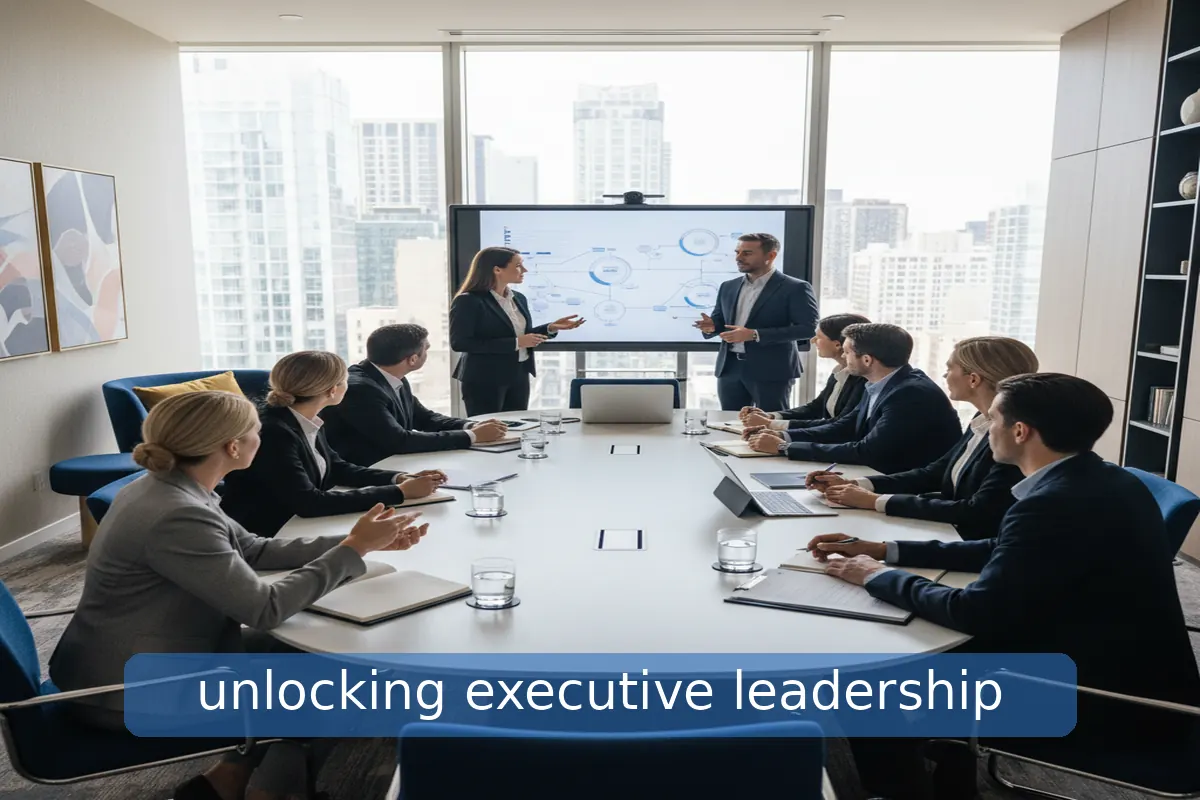
Unlocking executive leadership potential in 2026 demands a dynamic blend of strategic foresight, profound emotional intelligence, and agile change management capabilities. Modern executives must move beyond traditional management, evolving into adaptive visionaries who inspire innovation, foster resilient teams, and navigate complex global challenges. Continuous professional development, particularly through targeted training, is essential for cultivating these critical skills, ensuring leaders can drive sustainable organisational success and remain impactful in an ever-accelerating business landscape.
Quick Summary
- Modern executives need a dynamic blend of strategic foresight, profound emotional intelligence, and agile change management capabilities to thrive
- continuous professional development is crucial for navigating complex business environments and driving innovation
- mastering adaptive communication, data-driven decision-making, and talent development ensures impactful leadership
- effective leadership involves fostering organisational resilience and proactively managing disruption
Why is Professional Training Indispensable for Today’s Executives?
The business landscape of 2026 is characterised by unprecedented speed, complexity, and interconnectedness. Executives are no longer just managers; they are chief navigators, responsible for steering organisations through a constant flux of technological advancements, geopolitical shifts, and evolving market demands. In this environment, relying solely on past experience is insufficient. Professional training offers a vital pathway for executives to acquire new competencies, refine existing ones, and stay ahead of the curve, transforming challenges into strategic advantages.
Here are the key drivers making continuous executive training an absolute necessity:
-
Navigating Digital Transformation: Rapid advancements in AI, automation, and data analytics demand leaders who understand how to leverage these tools strategically, not just operationally. Training ensures executives can lead digital initiatives effectively.
-
Global Volatility and Uncertainty: From supply chain disruptions to economic shifts, the world is increasingly unpredictable. Training in areas like Strategic Crisis Management and Organisational Resilience equips leaders to anticipate, mitigate, and respond decisively.
-
Attracting and Retaining Top Talent: Modern employees seek leaders who are inspiring, empathetic, and committed to their development. Executives trained in Coaching for Success and Emotional Intelligence in Leadership are better positioned to build high-performing, loyal teams.
-
Fostering a Culture of Continuous Innovation: Stagnation is the enemy of growth. Training programmes focusing on Leadership, Creativity and Peak Performance provide frameworks for cultivating an environment where new ideas flourish and are effectively implemented.
-
Enhancing Strategic Impact: The ability to translate vision into actionable strategy is paramount. Courses like Leadership and Strategic Impact ensure executives can design, communicate, and execute strategies that deliver measurable results.
-
Developing Adaptive Leadership: The traditional hierarchical model is giving way to more agile, collaborative structures. Training helps executives master Leading with Confidence and Managing and Leading in a Multi-Cultural Workplace, fostering inclusive and effective leadership styles.
Investing in executive training isn’t merely an expense; it’s a strategic investment in human capital that yields significant returns in enhanced productivity, innovation, employee engagement, and ultimately, sustainable organisational success.
What Core Leadership Skills Do Executives Need to Master for 2026?
The modern executive toolkit is expansive, requiring mastery across a spectrum of competencies that balance intellect with interpersonal acumen. These are not merely desirable traits but essential skills for driving growth and resilience.
Emotional Intelligence (EI) & Self-Awareness
Emotional Intelligence (EI) is the bedrock of effective executive leadership. It’s the ability to understand and manage one’s own emotions, and to perceive, understand, and influence the emotions of others. In 2026, where collaboration is key and mental well-being is prioritised, EI is critical for building trust, resolving conflicts, and inspiring loyalty.
-
Self-Awareness: Understanding your strengths, weaknesses, values, and impact on others. This is the foundation for personal growth and authentic leadership.
-
Self-Regulation: Managing disruptive emotions and impulses, maintaining integrity, and demonstrating trustworthiness.
-
Motivation: Possessing a passion for work beyond money or status, pursuing goals with energy and persistence.
-
Empathy: Understanding the emotional makeup of other people and treating them according to their emotional reactions.
-
Social Skills: Proficiency in managing relationships and building networks, finding common ground, and building rapport.
Practical Insight: An executive with high EI can de-escalate a tense team meeting, provide constructive feedback that motivates rather than discourages, and foster an inclusive environment where diverse perspectives are valued.
Strategic Thinking & Visionary Leadership
Beyond day-to-day operations, executives must demonstrate Strategic Thinking – the ability to anticipate future trends, analyse complex data, and formulate long-term objectives that align with the organisation’s overarching mission. This involves moving from reactive problem-solving to proactive opportunity creation.
To cultivate visionary leadership:
-
Embrace Scenario Planning: Regularly explore multiple potential futures and develop contingency plans. This prepares the organisation for various outcomes, from market shifts to technological disruptions.
-
Challenge Assumptions: Routinely question established norms and seek out diverse perspectives to avoid groupthink and uncover innovative solutions.
-
Develop a Systems Perspective: Understand how different parts of the organisation and external ecosystem interact. Recognise interdependencies to make holistic decisions.
-
Prioritise Long-Term Value: Balance immediate financial pressures with sustainable growth, ethical considerations, and stakeholder value.
-
Communicate a Compelling Vision: Articulate a clear, inspiring future state that galvanises employees and external partners.
Adaptive Communication & Influence
Effective communication for executives in 2026 is far more than just delivering presentations; it’s about Adaptive Communication – tailoring messages to diverse audiences, fostering open dialogue, and influencing stakeholders across cultural and organisational boundaries.
Key communication challenges for executives:
-
Clarity in Complexity: Simplifying intricate strategies or technical information for non-experts without losing essential detail.
-
Cross-Cultural Nuance: Communicating effectively with international teams or partners, respecting diverse communication styles and cultural norms.
-
Active Listening: Truly understanding concerns, feedback, and unspoken cues from employees, clients, and partners.
-
Storytelling for Impact: Using narratives to convey vision, inspire action, and make strategic information memorable and relatable.
-
Digital Communication Etiquette: Mastering virtual meetings, email, and collaborative platforms to maintain engagement and clarity in a hybrid work environment.
Data-Driven Decision-Making & Critical Thinking
In an era of abundant information, Data-Driven Decision-Making is paramount. Executives must be able to interpret complex data sets, identify patterns, and apply critical thinking to draw sound conclusions, rather than relying solely on intuition. This requires a level of Data Management, Manipulation and Analysis using Excel or more advanced tools, and understanding Effective Business Decisions Using Data Analysis.
Practical steps for improved decision-making:
-
Define the Problem Clearly: Before seeking data, precisely articulate the question or challenge that needs addressing.
-
Identify Relevant Data Sources: Determine what information is needed and where to find credible, unbiased sources.
-
Analyse and Interpret Data: Use analytical skills to extract insights, identify trends, and understand correlations. Avoid confirmation bias.
-
Evaluate Alternatives: Based on data and critical thought, generate and assess multiple possible solutions or courses of action.
-
Assess Risks and Benefits: Understand the potential upsides and downsides of each decision, considering both short-term and long-term impacts.
-
Monitor and Adjust: Implement the decision, then track its outcomes against defined metrics and be prepared to pivot if necessary.
Change Management & Organisational Resilience
The only constant is change, and executives must excel in Change Management, guiding their organisations through transitions with minimal disruption and maximum adoption. This goes hand-in-hand with building Organisational Resilience – the capacity to anticipate, prepare for, respond to, and adapt to incremental change and sudden disruptions.
Components of effective change leadership:
-
Visionary Communication: Clearly articulate why change is necessary and what the desired future state looks like.
-
Stakeholder Engagement: Identify key stakeholders and involve them in the change process to foster ownership and reduce resistance.
-
Empowerment & Support: Provide teams with the resources, training, and psychological safety needed to adapt to new processes or roles.
-
Monitoring & Feedback: Continuously track progress, solicit feedback, and make necessary adjustments to the change strategy.
-
Celebrating Successes: Acknowledge milestones and successes to maintain momentum and reinforce positive behaviours.
Fostering Innovation & Creativity
Executives are responsible for creating an environment where Innovation and Creativity can flourish, driving competitive advantage and future growth. This means moving beyond merely tolerating new ideas to actively soliciting, evaluating, and investing in them.
-
Encourage Psychological Safety: Create a culture where employees feel safe to experiment, fail fast, and share unconventional ideas without fear of reprisal.
-
Allocate Resources for Experimentation: Dedicate time, budget, and talent to explore new concepts, even those that seem risky.
-
Promote Cross-Functional Collaboration: Break down silos to encourage diverse teams to collaborate on problem-solving and idea generation.
-
Lead by Example: Demonstrate a willingness to challenge the status quo, embrace new technologies, and learn from mistakes.
-
Recognise and Reward Innovation: Acknowledge and celebrate individuals and teams who contribute to innovative solutions.
Coaching, Mentoring & Talent Development
Modern executives understand that their role extends to developing the next generation of leaders. Coaching and Mentoring are essential skills for nurturing talent, empowering employees, and building a strong succession pipeline. This shifts the executive from a directive manager to a facilitative leader.
-
Active Listening: To understand an individual’s goals, challenges, and aspirations.
-
Constructive Feedback: Providing specific, actionable feedback that promotes growth and performance improvement.
-
Goal Setting: Helping mentees define clear, achievable professional and personal development goals.
-
Empowerment: Delegating effectively and providing opportunities for individuals to take ownership and lead.
-
Building Trust: Creating a safe and confidential space for open dialogue and vulnerability.

How Do Different Leadership Development Approaches Compare for Executives?
Choosing the right path for executive leadership development is critical. Various approaches offer distinct advantages, depending on an executive’s current role, learning style, budget, and specific development needs. Understanding these differences helps in making an informed decision.
Each approach has its merits. While self-paced courses offer accessibility, they lack the interactive depth. In-house programmes are excellent for organisational alignment but might miss external perspectives. Public workshops, like those offered by BMC Training, strike a balance, providing expert-led, practical content alongside invaluable peer networking. Executive coaching provides unparalleled personalisation but comes at a premium.
What Common Mistakes Should Executives Avoid in Their Leadership Journey?
Even the most accomplished executives can stumble if they fall prey to common pitfalls. Recognising these potential mistakes is the first step towards avoiding them and ensuring a smoother, more effective leadership trajectory.
-
Neglecting Continuous Learning: Believing that once you reach an executive level, formal learning is no longer necessary. The landscape evolves constantly; complacency is detrimental.
-
Failing to Delegate Effectively: Micromanaging or hoarding responsibilities, which stifles team growth, creates bottlenecks, and leads to executive burnout. True leadership is about empowering others.
-
Ignoring Feedback or Being Defensive: Dismissing constructive criticism, whether from subordinates, peers, or superiors. This closes off crucial avenues for self-improvement and can create a culture of fear.
-
Lack of Empathy or Emotional Intelligence: Operating solely on logic without understanding the human element. This can alienate teams, reduce morale, and hinder collaborative efforts.
-
Short-Term Focus Over Long-Term Strategy: Prioritising immediate gains or quarterly targets at the expense of sustainable growth, innovation, or ethical considerations.
-
Poor Work-Life Balance: Believing that constant work is a sign of dedication. This often leads to burnout, poor decision-making, and negatively impacts personal well-being and overall effectiveness.
-
Failing to Adapt to New Technologies or Trends: Resisting digital transformation or new methodologies, becoming a blocker rather than a facilitator of progress.
-
Operating in a Silo: Failing to collaborate across departments or with external partners. Modern challenges require integrated solutions and cross-functional leadership.
-
Lack of Clear Communication: Assuming teams understand the vision or strategy without consistent, transparent, and multi-channel communication.
-
Not Developing Successors: Failing to mentor and prepare the next generation of leaders, creating a talent void and risking organisational continuity.
Avoiding these mistakes requires self-awareness, humility, and a commitment to continuous personal and professional development.
How Can Executives Build a Personalised Leadership Development Plan?
A strategic approach to personal development is essential for executives. A personalised plan ensures that learning efforts are targeted, efficient, and aligned with both individual career aspirations and organisational needs.
Here’s a practical framework for building your executive leadership development plan:
-
Conduct a Comprehensive Self-Assessment & 360-Degree Feedback:
- Self-Reflection: Identify your current strengths, areas for improvement, career aspirations, and leadership style. What truly energises you? What drains you?
- Formal Assessments: Utilise tools like personality tests (e.g., DISC, MBTI), leadership style inventories, or skills assessments.
- 360-Degree Feedback: Gather anonymous feedback from superiors, peers, and direct reports. This provides invaluable insights into how your leadership is perceived by others, often highlighting blind spots.
- Action: Compile feedback; note recurring themes and surprising insights.
-
Identify Core Competency Gaps Aligned with Future Goals:
- Review your assessments and feedback against the “Essential Skills for 2026” (e.g., Emotional Intelligence, Strategic Thinking, Change Management).
- Consider your organisation’s strategic direction: What skills will be crucial for its success in the next 3-5 years?
- Prioritise: Focus on 2-3 key areas that, if improved, would have the most significant impact on your performance and career trajectory.
- Action: List your top 3 development priorities with clear justification.
-
Define Clear, Measurable Development Goals (SMART):
- For each priority, set Specific, Measurable, Achievable, Relevant, and Time-bound goals.
- Example: Instead of “Improve communication,” aim for “By Q4, successfully lead 3 cross-departmental strategy sessions, receiving an average feedback score of 4/5 on clarity and engagement.”
- Action: Write down 2-3 SMART goals for your chosen development areas.
-
Select Appropriate Learning Modalities & Resources:
- Consider your learning style and the depth required. Refer to the comparison table above.
- Formal Training: Executive programmes, workshops (like those at BMC Training), certifications (e.g., Strategic Planning Professional, Certified Manager of Quality).
- Mentorship/Coaching: Seek out experienced leaders or professional executive coaches.
- Experiential Learning: Volunteer for challenging projects, take on new responsibilities, lead a task force, or participate in a secondment.
- Self-Directed Learning: Books, articles, podcasts, online courses, industry conferences.
- Action: Map specific courses, mentors, or projects to each SMART goal.
-
Implement, Practice, and Apply:
- Actively engage in your chosen learning activities.
- Crucially, seek opportunities to immediately apply new knowledge and skills in your daily work. Learning is reinforced through practice.
- Action: Schedule learning activities and identify specific work scenarios for application.
-
Review, Reflect, and Adjust:
- Regularly (e.g., quarterly) review your progress against your SMART goals.
- Seek informal feedback on your development areas.
- Be flexible: The business environment and your needs may change, so be prepared to adapt your plan.
- Action: Set review dates and update your plan as needed.
This structured approach ensures your leadership development is a continuous, strategic journey, not a series of isolated events.
Who Benefits Most from Structured Executive Leadership Training?
While all executives can benefit from continuous learning, certain individuals and organisational contexts gain disproportionately from structured executive leadership training. These programmes are meticulously designed to address specific challenges and accelerate growth for those poised to make the greatest impact.
Structured executive leadership training is particularly beneficial for:
-
Newly Appointed or Recently Promoted Executives: Those stepping into senior roles for the first time often face a steep learning curve. Training provides foundational skills in strategic thinking, team leadership, and stakeholder management, helping them transition effectively and avoid common early-career mistakes.
-
Mid-Career Leaders Aiming for the C-Suite: Ambitious professionals looking to bridge the gap between functional expertise and enterprise-wide leadership. Programmes focusing on Leadership and Strategic Impact, Advanced Strategic Management, and Mastering Strategic Decision Making are invaluable.
-
Executives Leading Major Organisational Transformation: Leaders tasked with steering their companies through significant change, such as digital transformation, mergers, or market entry. Training in Change Management, Organisational Resilience, and Strategic Planning provides critical frameworks and tools.
-
Leaders in Rapidly Evolving Industries: Executives in sectors experiencing rapid technological shifts, regulatory changes, or intense competition (e.g., tech, finance, energy). Continuous training ensures they remain current with best practices and emerging trends, particularly in areas like Continuous Innovation and Process Improvement.
-
High-Potential Individuals Identified for Succession Planning: Organisations often invest in accelerated development for their future leaders. These programmes hone essential skills, broaden perspectives, and prepare them for greater responsibilities.
-
Executives Looking to Enhance Specific Competencies: Leaders who have identified a particular skill gap through performance reviews or 360-degree feedback, such as improving their Effective Negotiation, Persuasion and Critical Thinking or High Impact Business Communication.
-
Leaders in Diverse or Multi-Cultural Environments: Those managing global teams or operating in international markets benefit greatly from programmes on Managing and Leading in a Multi-Cultural Workplace and Advanced Communication and Interpersonal Skills.
For these individuals and organisations, structured executive leadership training is not just an opportunity for personal growth but a strategic imperative for sustained success and competitive advantage in the 2026 business landscape.
Expert Insight
“The most effective leaders in 2026 are not just skilled decision-makers; they are perpetual learners. They understand that leadership is a dynamic capability, not a static title. Investing in diverse, practical professional training is how they future-proof their careers and their organisations.” — Industry experts confirm this evolving paradigm in executive development.
Key Terms
-
Emotional Intelligence (EI): The capacity to understand and manage one’s own emotions, and to perceive and influence the emotions of others, crucial for effective leadership and team dynamics.
-
Strategic Agility: The ability of an organisation or leader to adapt quickly and effectively to changing market conditions, competitive landscapes, and technological advancements.
-
Organisational Resilience: The capacity of an organisation to anticipate, prepare for, respond to, and adapt to both incremental change and sudden disruptions to survive and prosper.
-
Digital Fluency: The comfort and competence in understanding and leveraging digital technologies for strategic advantage, rather than just operational use.
-
Executive Presence: The ability to inspire confidence and command respect through one’s demeanour, communication, and decision-making, projecting authority and credibility.
How Can BMC Training Support Your Professional Growth?
At BMC Training, we understand the dynamic demands placed upon executives in 2026. With a deep heritage in professional development and a keen focus on the UK market, we are uniquely positioned to help you unlock your full leadership potential. Our programmes are meticulously designed, drawing on the latest industry insights and delivered by experienced field specialists who bring real-world judgment and practical clarity to every session.
We offer a comprehensive portfolio of courses directly relevant to the essential skills executives need, including:
-
Leadership and Strategic Impact: Develop the foresight and frameworks to shape your organisation’s future.
-
Effective Organisational Leadership: Master the art of inspiring teams, fostering collaboration, and driving performance.
-
High Impact Business Communication: Refine your ability to influence, negotiate, and articulate vision across all levels.
-
Emotional Intelligence in Leadership Pinnacle: Elevate your self-awareness, empathy, and social skills for authentic leadership.
-
Strategic Planning Professional: Acquire robust methodologies for designing, implementing, and measuring strategic initiatives.
-
Advanced Problem Solving and Decision Making: Enhance your analytical rigour and critical thinking for complex challenges.
-
Change Management: Learn to lead successful transformations, mitigate resistance, and build resilient teams.
Our training is delivered through interactive workshops, blending theoretical knowledge with practical exercises, case studies, and peer discussions. We prioritise a learning environment that is engaging, challenging, and directly applicable to your role. Whether you are a new executive seeking foundational competencies or a seasoned leader aiming to refine specialised skills, BMC Training provides the expert guidance and accredited programmes to propel your career forward and ensure your organisation thrives. Partner with us to transform your leadership capabilities and make a lasting impact.
Frequently Asked Questions
Q: What defines “Unlocking Leadership Potential: Essential Skills for Executives” in today’s business climate?
Q: How do you choose the right executive leadership training programme for your specific needs?
Q: Who is BMC Training’s executive leadership training suitable for?
Q: What are the main benefits of enrolling in BMC Training’s executive leadership programmes?
Q: What should I check before enrolling in an executive training course?
Q: Where can you attend BMC Training’s executive development programmes?