

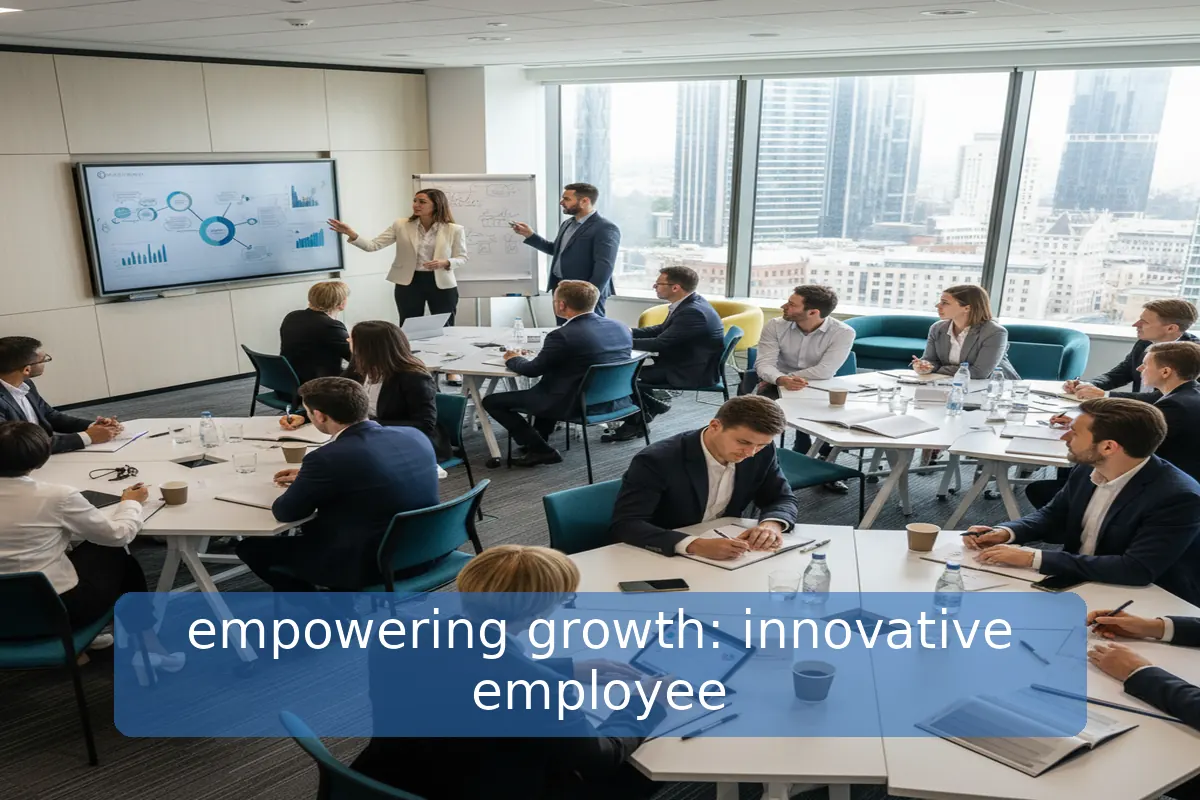
In 2026, the UK workforce faces a dynamic landscape shaped by rapid technological shifts, evolving skill demands, and a competitive global market. Innovative employee training and development strategies are no longer optional but essential for organisational resilience and growth. This guide explores cutting-edge approaches, from AI-powered personalised learning to strategic skill enhancement, empowering UK businesses to cultivate a highly adaptive, engaged, and productive talent pool ready for the future.
Quick Summary
- Focus on bespoke and technology-driven training
- Emphasize continuous learning cultures
- Provide a framework for measuring ROI
- Highlight common pitfalls and how to avoid them
For UK organisations aiming to thrive in 2026, employee training and development must move beyond traditional methods. The focus has shifted towards highly adaptive, personalised, and strategically aligned programmes that directly address the future of work. Our experience at BMC Training shows that successful strategies are built upon several interdependent pillars designed to foster genuine growth and competitive advantage.
Key Pillars for 2026:
-
Personalised Learning Journeys: Moving away from one-size-fits-all, training must be tailored to individual employee needs, career aspirations, and learning styles. This includes adaptive pathways, microlearning modules, and AI-driven content recommendations.
-
Skills-First Approach: Beyond job titles, organisations are prioritising the identification, development, and redeployment of specific future-proof skills (e.g., critical thinking, data literacy, AI fluency, emotional intelligence) to build adaptable workforces.
-
Integrated Technology & AI: Leveraging advanced learning technologies, including Learning Management Systems (LMS), Virtual Reality (VR), Augmented Reality (AR), and Artificial Intelligence (AI), for immersive, efficient, and scalable training delivery.
-
Continuous Learning Culture: Fostering an environment where learning is an ongoing, embedded part of daily work, encouraged from leadership down, and supported by accessible resources and time allocation.
-
Strategic Alignment with Business Goals: Ensuring all training initiatives directly link to overarching business objectives, such as innovation, market expansion, digital transformation, or improved customer experience. This moves training from a cost centre to a strategic investment.
-
Wellbeing and Resilience Integration: Recognising that employee development also encompasses mental wellbeing, stress management, and resilience training, crucial for sustaining performance in high-pressure environments.
How Do UK Organisations Select the Right Innovative Training Strategies?
Choosing the optimal training and development strategies requires a systematic approach, aligning closely with organisational goals, workforce demographics, and projected skill gaps. Rushed decisions often lead to wasted resources and disengaged employees. As a senior content strategist, I’ve observed that the most effective UK businesses follow a structured decision framework to ensure their investment yields tangible returns.
Consider this decision framework when selecting innovative training strategies:
-
Define Organisational Objectives:
- What are the core business goals for the next 1-3 years (e.g., market expansion, digital transformation, new product launch)?
- What specific performance improvements are required from the workforce to meet these goals?
-
Conduct a Comprehensive Training Needs Analysis (TNA):
- Identify current skill sets versus future skill requirements (skill gaps).
- Assess employee preferences for learning formats (e.g., online, in-person, blended, self-paced).
- Utilise performance reviews, employee surveys, and future-gazing workshops.
-
Evaluate Available Technologies & Providers:
- Research Learning Experience Platforms (LXP), AI-driven adaptive learning tools, VR/AR simulations, and reputable training providers like BMC Training.
- Consider the scalability, integration capabilities, and user-friendliness of potential solutions.
-
Pilot Programmes & Gather Feedback:
- Before a full rollout, test new strategies with a small cohort.
- Collect feedback on content relevance, delivery method, and perceived value.
- Iterate and refine based on pilot results.
-
Establish Clear Metrics for Success:
- Determine how the impact of the training will be measured (e.g., improved productivity, reduced errors, higher retention, skill acquisition rates).
- Align these metrics with initial organisational objectives.
-
Budget Allocation & ROI Projection:
- Allocate sufficient budget, considering both direct costs (platform, content, facilitators) and indirect costs (employee time).
- Project the potential return on investment (ROI) by quantifying anticipated benefits against costs.
What Role Does Advanced Technology Play in UK Employee Development Programmes?
Technology is no longer just a tool for delivering training; it’s a fundamental enabler of innovative, engaging, and scalable employee development. In 2026, UK organisations are harnessing advanced technologies to create richer learning experiences, automate administrative tasks, and provide data-driven insights into learning effectiveness. This shift allows for unprecedented personalisation and efficiency.
Key Technological Integrations in UK Training:
-
Artificial Intelligence (AI) and Machine Learning (ML):
- Personalised Content Curation: AI algorithms analyse learner data to recommend relevant courses, articles, and videos, creating highly individualised learning paths.
- Adaptive Learning Paths: AI adjusts the difficulty and content of training based on a learner’s performance, ensuring optimal challenge and engagement.
- Chatbots and Virtual Tutors: Provide instant answers to learner questions, offer support, and even facilitate practice sessions, freeing up human instructors for more complex tasks.
- Performance Analytics: AI-powered dashboards offer deep insights into learner progress, engagement, and skill acquisition, helping L&D teams refine programmes.
-
Virtual Reality (VR) and Augmented Reality (AR):
- Immersive Simulations: VR/AR creates realistic, risk-free environments for practical skills training, such as machinery operation, surgical procedures, or customer service scenarios.
- On-the-Job Guidance: AR overlays digital information onto real-world views, providing real-time instructions or data for complex tasks, enhancing learning by doing.
-
Learning Experience Platforms (LXPs) and Learning Management Systems (LMS):
- Centralised Hubs: LXPs and advanced LMS platforms serve as comprehensive portals for all learning resources, from formal courses to informal peer learning.
- Gamification: Incorporate game-like elements (points, badges, leaderboards) to boost engagement and motivation.
- Social Learning: Facilitate peer-to-peer knowledge sharing, discussion forums, and collaborative projects, fostering a community of learners.
-
Data Analytics and Business Intelligence (BI):
- Predictive Analytics: Identify employees at risk of skill obsolescence or those with high potential for specific roles, enabling proactive training interventions.
- Impact Measurement: Track training completion rates, skill proficiency gains, and correlate them with business KPIs to demonstrate ROI.
Which Common Pitfalls Should UK Businesses Avoid in Training Implementation?
Even with the best intentions and innovative tools, employee training programmes can falter if common pitfalls are not anticipated and mitigated. Our extensive experience working with diverse UK organisations highlights recurring mistakes that undermine effectiveness and waste valuable resources. Avoiding these missteps is crucial for maximising the impact of your investment.
Common Pitfalls to Avoid:
-
Lack of Strategic Alignment:
- Mistake: Implementing training without a clear link to overarching business goals or future skill needs.
- Avoidance: Always start with a robust Training Needs Analysis (TNA) tied to strategic objectives. Ask: “How does this training directly support our 2026 vision?”
-
One-Size-Fits-All Approach:
- Mistake: Delivering generic content to a diverse workforce with varying roles, experience levels, and learning styles.
- Avoidance: Embrace personalised learning paths, microlearning, and adaptive technologies. Segment your audience and tailor content accordingly.
-
Insufficient Leadership Buy-In and Support:
- Mistake: Training initiatives are seen as HR’s responsibility alone, without active participation or endorsement from senior leadership.
- Avoidance: Secure executive sponsorship. Leaders should champion learning, participate in training, and model continuous development.
-
Neglecting to Measure Impact:
- Mistake: Running programmes without clearly defined metrics or a plan to evaluate effectiveness and ROI.
- Avoidance: Establish KPIs before training begins. Utilise pre- and post-assessments, performance data, and feedback surveys to track progress and demonstrate value.
-
Poor Communication and Engagement:
- Mistake: Employees are unaware of available training, its benefits, or how it connects to their career progression.
- Avoidance: Develop a strong communication plan. Highlight career growth opportunities, share success stories, and make learning accessible and appealing.
-
Over-reliance on Technology Without Human Touch:
- Mistake: Believing technology alone can solve all training challenges, neglecting the importance of human interaction, mentorship, and coaching.
- Avoidance: Implement blended learning approaches that combine digital tools with facilitated discussions, workshops, and expert mentorship.
-
Inadequate Follow-Up and Reinforcement:
- Mistake: Training is a one-off event with no mechanisms for learners to apply new skills or receive ongoing support.
- Avoidance: Incorporate post-training support, peer learning groups, practical assignments, and opportunities for skill application in daily work.
How Can UK Companies Measure the True Impact and ROI of Training Initiatives?
Demonstrating the return on investment (ROI) for employee training and development is paramount for securing continued budget and leadership buy-in. In 2026, UK businesses are moving beyond simple completion rates, adopting sophisticated metrics and analytical approaches to prove the tangible value of their learning programmes. This requires a clear understanding of what to measure and how to interpret the data.
Effective Measurement Strategies for Training ROI:
Level 1: Reaction & Engagement
-
Metrics: Learner satisfaction surveys, feedback forms, attendance rates, engagement with digital content (clicks, time spent).
-
Insight: Gauges immediate learner perception and interest.
Level 2: Learning & Skill Acquisition
-
Metrics: Pre- and post-assessments, quizzes, certifications, simulations, skill proficiency ratings.
-
Insight: Determines if knowledge transfer and skill development have occurred.
Level 3: Behaviour & Application
-
Metrics: Performance reviews (pre/post training), 360-degree feedback, observation of new behaviours in the workplace, project success rates.
-
Insight: Assesses if learned skills are being applied on the job and leading to behavioural changes.
Level 4: Business Results & Impact
-
Metrics:
- Productivity: Output per employee, project completion times, efficiency gains.
- Quality: Error rates, defect reduction, customer satisfaction scores (CSAT).
- Cost Savings: Reduced rework, lower employee turnover, decreased operational expenses.
- Revenue Growth: Increased sales, new market penetration.
- Employee Retention: Turnover rates for trained vs. untraind staff.
-
Insight: Quantifies the direct impact on key business performance indicators.
Level 5: Return on Investment (ROI) Calculation
-
Formula: (Net Programme Benefits – Total Programme Costs) / Total Programme Costs x 100
-
Process:
- Isolate Benefits: Attribute specific business results directly to the training.
- Convert to Monetary Value: Quantify benefits (e.g., productivity increase = X hours saved x hourly wage).
- Calculate Costs: Include direct costs (platform, content, instructor fees) and indirect costs (learner time, administrative overhead).
- Compute ROI: Present as a percentage, demonstrating the financial return.
When Do Bespoke vs. Scalable Training Solutions Best Serve UK Workforce Needs?
The choice between developing a bespoke, custom-tailored training programme and implementing a more scalable, off-the-shelf solution is a critical decision for UK organisations. Each approach has distinct advantages and disadvantages, and the optimal choice often depends on the specific learning objectives, audience size, budget, and desired depth of impact.
Understanding the trade-offs is key to making an informed decision.
Decision Considerations for UK Businesses:
-
Strategic Importance: For critical, high-impact skills or strategic shifts, bespoke training offers the necessary depth and relevance.
-
Audience Size: For a small, executive team or highly specialised department, bespoke is often justified. For thousands of employees needing foundational skills, scalable is more practical.
-
Budget & Timeline: If resources are constrained or training is needed quickly, scalable solutions provide a faster, more affordable entry point.
-
Internal Expertise: Does your organisation have the internal expertise to develop high-quality bespoke content, or is it better to leverage external specialists?
How Can UK Enterprises Cultivate a Sustainable Culture of Continuous Learning?
A true culture of continuous learning is arguably the most powerful innovative strategy an organisation can adopt. It transforms learning from a transactional event into an embedded way of working, where employees are intrinsically motivated to acquire new knowledge and skills. For UK enterprises in 2026, fostering such a culture is vital for agility, innovation, and long-term competitiveness.
Steps to Build a Sustainable Learning Culture:
-
Leadership Role Modelling:
- Leaders must visibly engage in their own learning and development.
- They should champion learning initiatives and allocate time for employees to learn.
- “Our experience at BMC Training confirms that when senior leaders actively participate in development, it sends a powerful message throughout the organisation.”
-
Democratise Learning Resources:
- Provide easy access to a diverse range of learning materials: online courses, e-books, articles, podcasts, internal knowledge bases.
- Utilise LXPs to offer a Netflix-like experience for learning content.
-
Integrate Learning into Workflows:
- Encourage microlearning opportunities during the workday.
- Incorporate learning objectives into performance reviews and personal development plans.
- Create dedicated “learning hours” or “skill-building sprints.”
-
Foster Psychological Safety:
- Create an environment where it’s safe to experiment, make mistakes, and ask questions without fear of judgment.
- Emphasise growth mindset over fixed mindset.
-
Promote Peer-to-Peer Learning:
- Establish mentorship programmes, coaching circles, and communities of practice.
- Encourage internal knowledge sharing through workshops, presentations, and collaborative projects.
-
Recognise and Reward Learning:
- Acknowledge and celebrate employees who actively engage in learning and apply new skills.
- Link learning achievements to career progression and development opportunities.
-
Feedback Loops for Learning Programmes:
- Regularly solicit feedback on the effectiveness and relevance of learning resources.
- Continuously adapt and improve programmes based on learner input and business needs.
Expert Insight
“In 2026, the most successful UK businesses will be those that view learning not as a separate function, but as the very operating system of their organisation. It’s about building ‘learnability’ into every role and fostering a genuine curiosity that drives both individual and collective innovation. The focus must shift from ‘what skills do we lack?’ to ‘how quickly can we enable our people to acquire the skills they’ll need next?'”
— Industry experts confirm that this proactive approach to skill development is critical for future resilience.
Key Terms
-
Learning Management System (LMS): A software application for the administration, documentation, tracking, reporting, automation, and delivery of educational courses, training programs, or learning and development programs.
-
Learning Experience Platform (LXP): A learner-centric platform that aggregates and curates learning content from various sources, offering personalised recommendations and fostering continuous skill development.
-
Microlearning: Delivering learning content in small, digestible chunks (typically 2-10 minutes) to facilitate quick consumption and retention, often via mobile devices.
-
Skills-First Approach: An organisational strategy that prioritises identifying, developing, and deploying specific skills across the workforce, rather than focusing solely on job titles or formal qualifications.
-
Training Needs Analysis (TNA): A systematic process of identifying the gap between current and desired employee performance and skills, used to determine appropriate training interventions.
How Can BMC Training Support Your Professional Growth?
At BMC Training, we understand the complexities and opportunities of employee training and development for the UK workforce in 2026. Our extensive portfolio of courses is meticulously designed to address the critical skill gaps and strategic needs identified in today’s dynamic business environment. From foundational management principles to cutting-edge leadership and data analytics, we equip your teams with the practical knowledge and actionable strategies required for immediate impact and long-term success.
Our programmes are crafted by industry specialists, ensuring real-world relevance and practical application. Whether your organisation needs to enhance Leadership and Strategic Impact, refine High Impact Business Communication, master Data Management, Manipulation and Analysis using Excel, or implement Continuous Innovation and Process Improvement, BMC Training offers tailored solutions. We can help you build bespoke training pathways, deliver immersive classroom experiences, or facilitate flexible online learning, all aligned with your unique organisational objectives. Partner with BMC Training to empower your workforce, drive innovation, and secure a competitive edge in the evolving UK market.
Frequently Asked Questions
Q: Why is innovative employee training crucial for UK businesses in 2026?
Q: What are some key innovative training technologies being used in 2026?
Q: How can organisations measure the ROI of their training programmes effectively?
Q: What is the difference between bespoke and scalable training solutions?
Q: How can a UK company foster a continuous learning culture?
Q: What common mistakes should be avoided when implementing new training strategies?