


While often used interchangeably, leadership and management represent distinct yet complementary disciplines critical for organizational success. Leadership primarily involves setting vision, inspiring change, and influencing people towards a common future, whereas management focuses on planning, organizing, controlling resources, and executing strategies efficiently to achieve defined objectives. Understanding this fundamental difference is key to personal career development and building resilient, high-performing teams, guiding individuals toward appropriate training programs that cultivate specific, impactful skills for the dynamic professional landscape of 2026.
Quick Summary
- Leadership inspires vision and change, while management focuses on executing plans and optimizing operations
- effective professionals blend both
- training helps develop distinct skills for each discipline
- choosing the right program depends on individual career goals and organizational needs
What is the Core Distinction Between Leadership and Management?
The fundamental difference between leadership and management lies in their primary focus, approach, and impact. While a manager’s role is often tied to a formal position within an organizational hierarchy, a leader’s influence can extend beyond formal titles, driven by their ability to inspire and guide. Both are indispensable for an organization’s health and growth, but they address different facets of organizational function.
Consider these key differentiators:
-
Focus: Leaders are forward-looking, envisioning the future and setting the strategic direction. Managers are present-focused, ensuring daily operations run smoothly and objectives are met.
-
Approach to Change: Leaders embrace and often instigate change, seeing it as an opportunity for innovation and growth. Managers tend to maintain stability and control, managing change within established systems.
-
Influence: Leaders inspire trust and commitment through persuasion, vision, and personal example. Managers exert authority through their position, using directives and control mechanisms.
-
Risk Tolerance: Leaders are typically more comfortable with risk, viewing it as a necessary component of innovation. Managers often seek to minimize risk, focusing on predictability and efficiency.
-
Relationship with Subordinates: Leaders often act as mentors and coaches, fostering individual growth and development. Managers typically supervise and direct employees, focusing on task completion and performance.
Leadership vs. Management: A Comparative Overview
This table underscores that while management is about “doing things right,” leadership is about “doing the right things.” Both are essential, and the most effective professionals often exhibit a blend of both qualities, adapting their approach to specific situations. For a deeper dive into the foundational elements of each, consider exploring courses like The Essentials of Leadership and The Management Essentials.
Why Does Understanding This Distinction Matter for Your Career and Organisation?
Recognizing the unique demands of leadership and management is not merely an academic exercise; it’s a strategic imperative for both individual career progression and sustained organizational success. In today’s rapidly evolving global marketplace, professionals are increasingly expected to demonstrate capabilities across both spectrums, albeit with varying emphasis depending on their role and stage of career.
For individuals, understanding this difference empowers you to:
-
Target Your Development: Instead of generic “management training,” you can seek out specific leadership development programs (e.g., The Leadership Development Programme) or management skill courses (e.g., Mastering Management Skills) that align with your aspirations.
-
Enhance Career Mobility: Being able to articulate whether you’re seeking to inspire teams toward new frontiers (leadership) or optimize complex processes (management) helps you position yourself for the right opportunities.
-
Improve Personal Effectiveness: Knowing when to lead and when to manage allows for more agile and impactful decision-making, improving your ability to navigate challenges and drive results. Courses like Developing Personal Effectiveness with Positive Skills can be particularly beneficial here.
-
Build Stronger Relationships: Adapting your style to whether a situation requires guidance and inspiration or clear direction and oversight fosters better rapport and productivity within your team.
For organisations, this distinction is vital for:
-
Strategic Alignment: Ensuring that leadership sets a clear vision that management can then effectively translate into actionable plans and measurable outcomes.
-
Talent Development: Designing targeted training paths that cultivate future leaders who can innovate and inspire, alongside skilled managers who can ensure operational excellence and stability.
-
Organizational Resilience: Building a workforce capable of both navigating change management (driven by leadership vision) and executing performance management (driven by managerial oversight) is crucial for adaptability in crises. Exploring programs such as Organisational Resilience and Strategic Crisis Management can further enhance this capability.
-
Employee Engagement: Providing clear pathways for growth, whether into leadership roles or advanced management positions, boosts morale and retention by showing a commitment to employee development.
Ignoring these differences can lead to “over-managing” where innovation is stifled, or “under-leading” where teams lack direction and purpose. The most successful organisations strategically invest in both, understanding their interdependent nature.
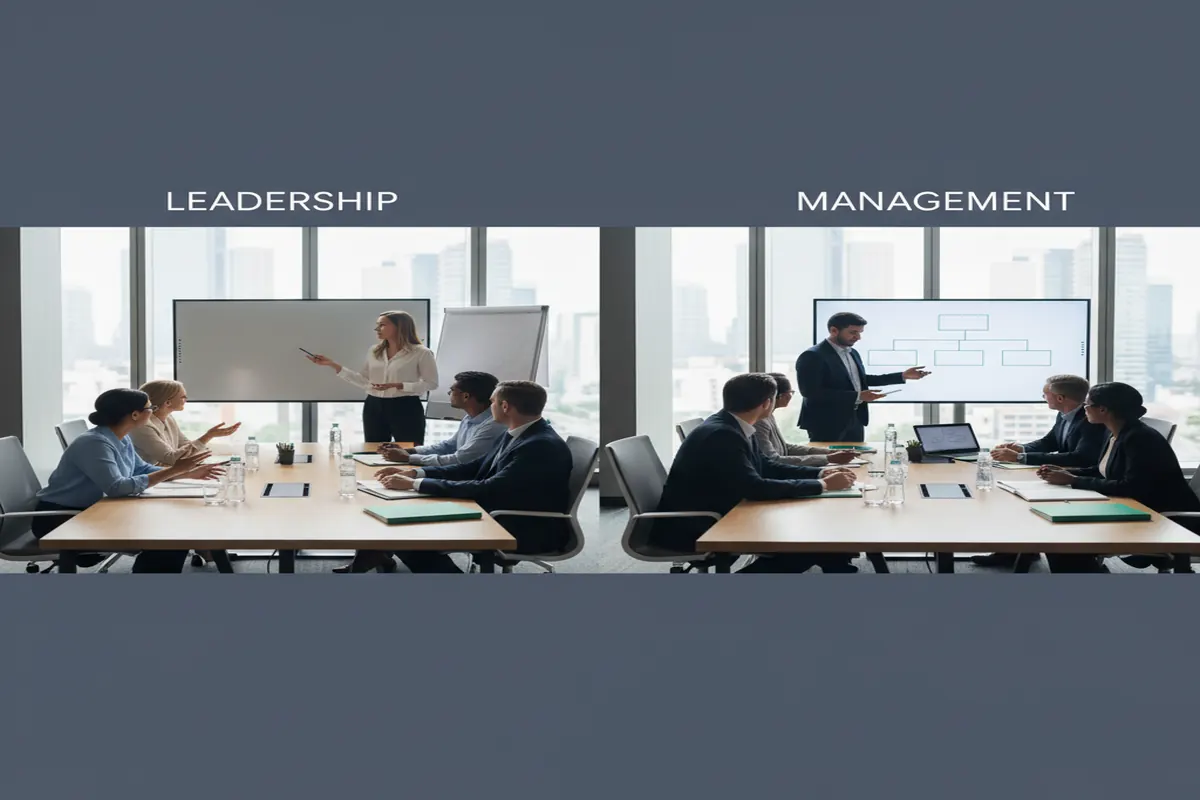
Key Skills and Qualities: What Defines a Leader vs. a Manager?
While there’s overlap, the defining skills and qualities of effective leaders and managers diverge significantly, reflecting their distinct roles and objectives. Identifying these attributes is crucial for both self-assessment and for tailoring your professional development journey.
Essential Qualities and Skills of a Leader
Leaders are architects of the future, driven by a compelling vision and the ability to rally others to their cause. Their influence stems from their character and capacity to inspire.
-
Visionary Thinking: The ability to foresee future trends, articulate a compelling direction, and inspire others to pursue it. This is often cultivated in programs focused on Strategic Planning, Development and Implementation or Strategy Excellence.
-
Inspiration & Influence: Motivating teams beyond mere compliance, fostering commitment and passion. Courses like Leadership, Influence and Trust are highly relevant.
-
Strategic Communication: The skill to convey complex ideas, vision, and values clearly and persuasively, often through storytelling and active listening. High Impact Business Communication is a prime example of such training.
-
Empathy & Emotional Intelligence: Understanding and relating to the emotions of others, building strong interpersonal connections, and fostering a supportive environment. This is a core focus of Mastering Emotional Intelligence – Skills for Excellent Leadership.
-
Adaptability & Resilience: Navigating uncertainty, embracing change, and maintaining composure under pressure. Leadership Excellence in Handling Pressure and Stress directly addresses this.
-
Innovation & Creativity: Encouraging new ideas, challenging the status quo, and fostering a culture of continuous improvement. Consider Leadership, Creativity and Peak Performance.
Essential Qualities and Skills of a Manager
Managers are the operational backbone, ensuring efficiency, consistency, and the successful execution of plans. Their strength lies in their ability to organize, control, and optimize processes.
-
Planning & Organization: Setting clear objectives, defining tasks, allocating resources, and establishing timelines. Relevant courses include Successful Planning, Organising and Delegating and The Management Essentials.
-
Delegation & Empowerment: Assigning tasks effectively, trusting team members, and providing the necessary authority and resources.
-
Performance Monitoring & Feedback: Tracking progress, evaluating outcomes against targets, and providing constructive feedback for improvement. This is central to Performance Measurements, Continuous Improvement and Benchmarking.
-
Problem-Solving & Decision-Making: Identifying operational issues, analyzing root causes, and implementing effective solutions within established frameworks. Advanced Problem Solving and Decision Making offers practical skills.
-
Resource Management: Efficiently allocating and utilizing financial, human, and material resources to achieve objectives.
-
Process Optimization: Continuously looking for ways to streamline workflows, reduce waste, and improve operational efficiency. Continuous Innovation and Process Improvement is a key area here.
Many roles, especially those in middle management, require a strong blend of both sets of skills. A middle manager, for instance, needs to lead their team through strategic changes while also managing daily operations and resources effectively. Programs like Leadership and Management Skills for Supervisors or Leadership and Management Skills for New Manager and Supervisor are designed to bridge this gap.
Navigating the Nuances: When Do You Need Leadership, and When Management?
The dynamic nature of modern organisations means that professionals frequently need to pivot between a leadership mindset and a management approach. Understanding when to apply each is a hallmark of truly effective professionals. It’s not about choosing one over the other permanently, but rather about strategic application.
Scenarios Demanding a Leadership Approach
Leadership is paramount when the situation calls for direction, inspiration, and a shift in perspective.
-
Initiating Major Change: When an organisation needs to pivot strategy, adopt new technologies, or undergo cultural transformation, strong leadership is required to articulate the “why,” build consensus, and navigate resistance. This links directly to Advanced Conflict Resolution and Change Management Strategies.
-
Defining Vision and Strategy: At the highest levels, leadership is about setting the long-term course, identifying market opportunities, and creating a compelling future state. Strategy Design Bootcamp or Leadership and Strategic Impact are ideal for this.
-
Motivating and Empowering Teams: In situations where morale is low, or innovation is stagnant, leadership inspires individuals to find purpose, take initiative, and contribute creatively. Leading with Confidence and Empowering Leadership-Navigating People and Organizational Dynamics are crucial.
-
Crisis and Uncertainty: During unforeseen challenges or emergencies, leadership provides calm direction, instills confidence, and guides the organisation through turbulent times. Consider Leadership and Decision – Making in Crisis and Emergency Situations.
-
Fostering a Culture of Innovation: Creating an environment where experimentation is encouraged, failures are learning opportunities, and continuous improvement is embedded requires visionary leadership. Continuous Innovation and Process Improvement is highly relevant.
Scenarios Demanding a Management Approach
Management is essential when the focus is on execution, efficiency, and maintaining operational integrity.
-
Executing Strategic Plans: Once a vision is set, management translates that vision into concrete goals, allocates resources, and oversees the tactical steps to achieve them. This involves skills honed in Strategic Planning, Communication, Measurement and Implementation.
-
Optimizing Daily Operations: Ensuring processes run smoothly, resources are utilized efficiently, and performance targets are met consistently. Quality Management Essentials and Process Management – Mapping and Improvement are key.
-
Resource Allocation and Budgeting: Effectively managing budgets, personnel, and equipment to maximize output and minimize waste. The Essentials of Budgeting and Cost Control is a fundamental course.
-
Performance Monitoring and Evaluation: Tracking individual and team performance, providing structured feedback, and implementing corrective actions to meet objectives. Managing Employee Performance, Behaviour and Attitudes is a core management function.
-
Problem-Solving within Established Systems: Addressing day-to-day operational issues, troubleshooting problems, and implementing solutions that adhere to existing policies and procedures. Advanced Problem Solving and Decision Making can be applied here.
The most effective professionals understand that these roles are not mutually exclusive. A project manager, for example, must lead their team through complex challenges while also managing budgets, timelines, and resources. Similarly, a CEO must provide visionary leadership while also overseeing the management structures that ensure the vision becomes a reality. This duality is often addressed in comprehensive programs like The Complete Course on Management and Leadership.
Choosing the Right Training: What to Look for in Leadership and Management Courses?
Selecting the ideal leadership and management training program is a critical decision that impacts your career trajectory and your organisation’s future. With a plethora of options available, discerning the right fit requires careful consideration of content, delivery, and desired outcomes. This section addresses the common user query about “what is leadership and management course” and delves into factors like program details, benefits, and the typical investment involved, including “is the cost of leadership training.”
Key Criteria for Evaluating Training Programs
To make an informed choice, consider the following evaluation criteria:
-
Relevance of Curriculum:
- Leadership Programs: Should focus on strategic thinking, vision casting, change leadership, influence, and developing a coaching mindset. Look for modules on Strategic Planning Professional, Leadership Communication, and Developing Emotionally Intelligent Management and Leadership Skills.
- Management Programs: Should cover operational planning, resource allocation, performance management, delegation, and effective supervision. Seek out courses on Successful Planning, Organising and Delegating, Key Performance Indicators and Optimisation, and The Effective Supervisor.
- Combined Programs: For roles requiring both, ensure a balanced curriculum that integrates strategic leadership with practical management techniques. The Essentials of Leadership and Management is an excellent example.
-
Practical Application & Experiential Learning:
- The best courses move beyond theory, incorporating case studies, simulations, role-playing, and real-world projects. Look for phrases like “practical workshops,” “action learning,” or “scenario-based training.” This ensures skills are immediately transferable.
-
Instructor Expertise & Field Experience:
- Learn from seasoned professionals who have real-world experience. Instructors should be more than academics; they should be field specialists who can share practical insights and common pitfalls. Check their backgrounds and testimonials.
-
Program Structure & Delivery Method:
- Duration: Short workshops (1-3 days) for specific skill-building, longer certification programs (weeks to months) for comprehensive development.
- Format: In-person, virtual (live online), blended learning. Choose what best fits your schedule and learning style. Virtual options offer flexibility for global participants.
- Certification: Does the program offer a recognized certification (e.g., Certificate in Leadership and Management Excellence)? This adds tangible value to your resume.
-
Peer Learning & Networking Opportunities:
- The chance to learn from peers in different industries and roles can be invaluable. Look for programs that facilitate group discussions, collaborative projects, and networking events.
Understanding the Cost of Leadership and Management Training
The cost of leadership and management training varies significantly based on depth, duration, provider, and accreditation. It’s crucial to view this as an investment, not an expense, considering the potential ROI.
-
Factors Influencing Cost:
- Program Type: A 2-day workshop will naturally cost less than a comprehensive 5-day masterclass (e.g., Management Excellence Masterclass) or a multi-module certification.
- Customization: Tailored programs for specific organisational needs will typically incur higher costs than off-the-shelf public courses.
- Provider Reputation: Reputable training providers with experienced instructors and proven methodologies may have higher fees.
- Inclusions: Some programs include materials, assessments, coaching sessions, and post-course support, which affect the price.
- Location/Delivery: In-person training often has higher logistical costs than virtual alternatives.
-
Assessing ROI: When considering “is the cost of leadership training” worth it, evaluate:
- Improved Performance: Will the training lead to measurable improvements in individual or team productivity, decision-making, or problem-solving?
- Career Advancement: Does the certification or skill acquisition open doors to promotions or new opportunities?
- Employee Retention: Investing in development can significantly reduce turnover costs by boosting employee engagement and loyalty.
- Organisational Impact: Can the skills learned contribute to strategic goals, innovation, or increased profitability?
Many organisations find that the long-term benefits of investing in robust leadership and management training far outweigh the initial financial outlay, leading to a more skilled, engaged, and resilient workforce.
Common Pitfalls: Mistakes to Avoid in Leadership and Management Development
Embarking on a journey of professional development in leadership and management is commendable, but certain missteps can diminish the effectiveness of these efforts. Recognizing and actively avoiding these common pitfalls ensures a more impactful and sustainable growth trajectory.
1. Confusing Activity with Development
A frequent mistake is equating attending a course with actual development. True growth requires more than passive participation.
-
What to Avoid: Simply signing up for courses without a clear learning objective or follow-through plan.
-
Better Approach: Before enrollment, define specific, measurable goals for what you want to achieve. After the course, actively apply the learned concepts in your daily work, seek feedback, and reflect on your progress. Consider a structured approach to applying new skills, perhaps through a personal development plan.
2. Overlooking the “Why” Behind Training
Without a clear understanding of why specific training is needed, it can feel disconnected from real-world challenges.
-
What to Avoid: Randomly selecting courses based on trending topics or what others are doing, rather than addressing specific skill gaps or organisational needs.
-
Better Approach: Conduct a thorough needs assessment. For individuals, identify areas for improvement through self-reflection, performance reviews, or 360-degree feedback. For organisations, align training initiatives directly with strategic objectives and competency frameworks. For instance, if the goal is to improve team collaboration, look for courses like Advanced Teamwork and Cooperation Skills.
3. Neglecting the Interplay Between Leadership and Management
Treating leadership and management as entirely separate or even conflicting domains can create silos and hinder holistic development.
-
What to Avoid: Focusing exclusively on “pure” leadership or “pure” management training without acknowledging how they intersect and complement each other, especially in roles like middle management.
-
Better Approach: Seek programs that emphasize the integration of both skill sets, or strategically combine different courses. Understand that a leader often needs strong management skills to execute their vision, and a manager needs leadership qualities to inspire their team. Comprehensive programs like The Complete Course on Management and Leadership can be highly beneficial.
4. Failing to Foster a Learning Culture
Individual training yields limited results if the broader organisational culture doesn’t support continuous learning and application.
-
What to Avoid: Sending employees to training without creating opportunities for them to apply new skills, share knowledge, or receive support from superiors.
-
Better Approach: Implement a culture of continuous learning. Encourage managers to coach their teams (e.g., through Coaching for Success in the Oil and Gas Industry), provide mentorship, and celebrate the application of new skills. Integrate learning into performance reviews and career development plans.
5. Ignoring Leadership Communication as a Foundational Skill
Poor communication can undermine even the most brilliant leadership vision or the most efficient management plan.
-
What to Avoid: Assuming communication skills are innate or don’t require specific development.
-
Better Approach: Prioritize training in leadership communication. Effective leaders and managers must be adept at conveying information, inspiring action, providing feedback, and resolving conflicts. Courses like High Impact Business Communication and Mastering Communication, Negotiation and Presentation Skills are indispensable for ensuring that messages land effectively and drive desired outcomes.
By consciously navigating these common pitfalls, individuals and organisations can maximize the return on their investment in leadership and management development, fostering genuine growth and sustained success.
Tailored Programs for Organizational Success: Middle Management, Change, and Performance
Effective organisations understand that leadership and management development isn’t a one-size-fits-all endeavor. Instead, it requires tailored programs that address the unique challenges and opportunities within specific roles and strategic contexts. Focusing on middle management, change management, and performance management reveals how targeted training can drive significant organizational success.
Empowering Middle Management: The Critical Link
Middle managers are the linchpins of any organisation, translating strategic vision into operational reality. They manage teams, often lead other managers, and are crucial for executing strategy. Their development requires a unique blend of both leadership and management skills.
-
Challenges for Middle Management:
- Bridging the Gap: Balancing top-down strategic directives with bottom-up operational realities.
- Leading Leaders: Developing their direct reports into effective managers and leaders.
- Resource Constraints: Achieving results with often limited resources and competing priorities.
- Driving Engagement: Maintaining team motivation and productivity amidst changing environments.
-
Tailored Training Focus:
- Strategic Execution: Courses that teach how to break down high-level strategy into actionable plans, such as Strategic Planning, Communication, Measurement and Implementation.
- Team Leadership: Programs focused on motivating teams, conflict resolution, and fostering collaboration, like Mastering Team Leadership Skills or Improving Productivity and Employee Engagement thru Effective Front Line Leadership.
- Effective Delegation: Enhancing skills in assigning tasks, empowering subordinates, and monitoring progress.
- Leadership Communication: Strengthening their ability to communicate vision and changes clearly to their teams. This is where courses like High Impact Business Communication become vital.
- Managerial Leadership: Dedicated courses such as Managerial Leadership or Leadership and Management Skills for Supervisors are specifically designed for this critical group.
Mastering Change Management: Leading Through Transition
In 2026, the only constant is change. Organisations that can effectively navigate and leverage change gain a significant competitive advantage. Change management is not just a process; it’s a leadership imperative.
-
Leadership’s Role in Change:
- Vision Communication: Articulating the necessity and benefits of change, building a compelling narrative.
- Stakeholder Engagement: Influencing key stakeholders and overcoming resistance.
- Culture Shaping: Fostering an adaptable and resilient organisational culture.
-
Management’s Role in Change:
- Implementation Planning: Developing detailed plans for transitioning processes, systems, and people.
- Resource Allocation: Ensuring necessary resources are available to support the change.
- Monitoring & Adjustment: Tracking progress, identifying roadblocks, and making necessary adjustments.
-
Tailored Training Focus:
- Advanced Conflict Resolution and Change Management Strategies](%internal_link_Advanced_Conflict_Resolution_and_Change_Management_Strategies%): Equipping leaders and managers with tools to proactively address resistance and facilitate smooth transitions.
- Strategic Crisis Management](%internal_link_Strategic_Crisis_Management%): Preparing for unforeseen disruptions and leading teams through challenging periods.
- Continuous Innovation and Process Improvement](%internal_link_Continuous_Innovation_and_Process_Improvement%): Embedding a mindset that views change as an opportunity for growth.
Optimizing Performance Management: Driving Results and Development
Effective performance management systems are crucial for aligning individual efforts with organisational goals, fostering growth, and ensuring accountability. This requires both leadership to set the strategic context and management to execute the processes.
-
Leadership’s Role in Performance:
- Goal Setting: Establishing clear, inspiring, and challenging organisational objectives.
- Values Alignment: Ensuring performance metrics reflect organisational values and culture.
- Empowerment: Creating an environment where employees feel empowered to achieve high performance.
-
Management’s Role in Performance:
- Objective Setting: Translating strategic goals into individual and team objectives.
- Feedback & Coaching: Providing regular, constructive feedback and coaching for development.
- Appraisal & Recognition: Conducting fair performance appraisals and recognizing achievements.
- Development Planning: Collaborating with employees on personal development plans.
-
Tailored Training Focus:
- Managing Employee Performance, Behaviour and Attitudes](%internal_link_Managing_Employee_Performance,_Behaviour_and_Attitudes%): Providing managers with the skills to address performance issues constructively.
- Performance Management – Setting Objectives and Conducting Appraisals](%internal_link_Performance_Management_-_Setting_Objectives_and_Conducting_Appraisals%): Equipping managers with best practices for the entire performance cycle.
- Key Performance Indicators and Optimisation](%internal_link_Key_Performance_Indicators_and_Optimisation%): Teaching how to select, track, and optimize KPIs for strategic impact.
- Effective Performance Review](%internal_link_Effective_Performance_Review%): Focusing on the practical aspects of delivering impactful performance discussions.
By investing in these tailored programs, organisations can cultivate a workforce that is not only highly skilled but also strategically aligned and adaptable, ready to meet the complex demands of the modern business environment.
Expert Insight
“The distinction between leadership and management is becoming increasingly blurred at operational levels, yet more critical at strategic junctures. Modern professionals aren’t asked to be exclusively one or the other, but rather to possess the acumen to identify when a situation demands visionary leadership and when it requires meticulous management. The most successful individuals and organisations in 2026 will be those who actively cultivate this adaptive capacity through integrated development programs.” – Industry experts confirm that this integrated approach is key to navigating today’s complex business landscape.
Key Terms
-
Leadership Development: A systematic process of enhancing an individual’s capacity to influence, motivate, and enable others to contribute to the effectiveness and success of the organisations of which they are members.
-
Management Training: Programs designed to equip individuals with the skills and knowledge required to plan, organize, direct, and control resources effectively to achieve specific organizational goals.
-
Middle Management: The layer of management between frontline employees and senior leadership, responsible for implementing strategies and leading teams, often requiring a blend of both leadership and management skills.
-
Change Management: The systematic approach to dealing with the transition or transformation of organizational goals, processes, or technologies. The purpose of change management is to implement strategies for effecting change, controlling change, and helping people adapt to change.
-
Performance Management: An ongoing process of communication between a supervisor and an employee that occurs throughout the year, in support of accomplishing the strategic objectives of the organisation. It includes setting expectations, coaching, feedback, and performance appraisals.
How Can BMC Training Support Your Professional Growth?
At BMC Training, we understand that true professional excellence in 2026 demands a nuanced blend of both inspiring leadership and effective management. As experienced field specialists and long-form content strategists, we don’t just offer courses; we provide comprehensive knowledge assets designed to elevate your capabilities, whether you’re aiming to refine your strategic vision or optimize your operational efficiency.
Our extensive portfolio includes:
-
Targeted Leadership Programs: From The Art of Leadership to Strategic Leadership and Operational Excellence in the Oil Refinery Sector, we equip aspiring and current leaders with the foresight, influence, and communication skills to inspire change and drive innovation.
-
Comprehensive Management Courses: Master the intricacies of planning, organizing, and execution with programs like Mastering Management Skills, Competency -Based Management, or specialized offerings such as IT Service Management.
-
Integrated Leadership and Management Solutions: For professionals navigating the complexities of modern roles, our combined programs like The Complete Course on Management and Leadership provide a holistic approach, ensuring you can seamlessly transition between inspiring vision and meticulous execution.
-
Specialized Development for Key Areas: We address critical sub-topics such as Advanced Conflict Resolution and Change Management Strategies, Performance Management – Setting Objectives and Conducting Appraisals, and High Impact Business Communication, ensuring you gain practical skills directly applicable to your challenges.
With BMC Training, you benefit from:
-
Expert Instructors: Learn from industry veterans and field specialists who bring real-world experience and practical insights to every session.
-
Globally Relevant Curriculum: Our programs are designed to meet international standards and address the diverse needs of professionals worldwide.
-
Flexible Learning Options: Choose from in-person, live online, or tailored corporate training solutions to fit your schedule and organizational requirements.
Invest in your future with BMC Training and transform your potential into tangible success. Explore our course catalog today and take the definitive step towards becoming a more effective leader and manager.
Frequently Asked Questions
Q: Can someone be both a leader and a manager?
Q: Is leadership training more advanced than management training?
Q: How do I know if I need leadership training or management training?
Q: What are the benefits of leadership and management training for my career?
Q: What is the typical duration of these training courses?
Q: Are these courses suitable for all industries?